
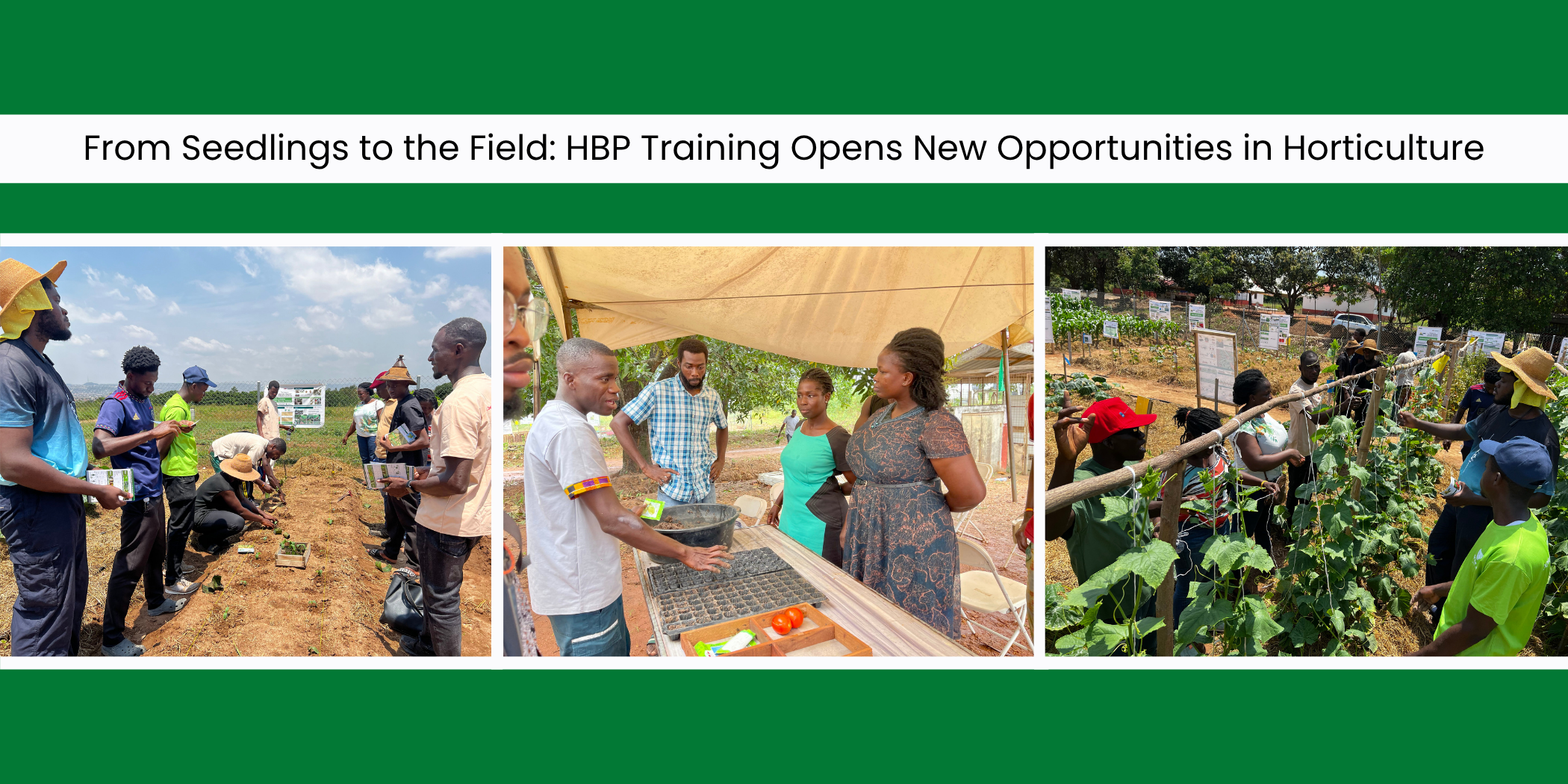
For participants at HBP’s recent practical horticulture training, two days on the farm opened up new possibilities. Among them was Faustina Ankrah, a mushroom producer who had long wanted to explore vegetable farming but lacked the knowledge to begin. Her account was one of several participant reflections on the value of practical learning. She left with the confidence to start small and the ambition to grow into commercial production.

That connection between knowledge, confidence and action was at the heart of the training delivered by the Horticulture Business Platform (HBP) in collaboration with East-West Seed Knowledge Transfer on 21–22 October 2026. Held at the East-West Seed-KT Learning Farm within the University of Ghana, the programme brought together farmers, agribusiness entrepreneurs and young horticulture enthusiasts for hands-on learning.
The training contributes to HBP’s partnership with IDH, which targets 150 participants annually for training in Good Agricultural Practices (GAPs) and enterprise development. The aim is to equip participants with skills that support viable businesses, strengthen livelihoods and create opportunities for employment.
Day one focused on the foundations of successful vegetable production: raising healthy seedlings and creating the right nursery conditions.
Participants explored different types of nursery infrastructure, their practical uses, and how to select suitable options for their production circumstances. One innovation that particularly captured their attention was the use of leaf pots as a low-cost alternative to conventional seed trays. It was a practical demonstration of how locally available materials can help make production more accessible to aspiring growers.

The sessions encouraged participants to look beyond simply getting seeds to germinate and consider the care and conditions needed to raise seedlings ready for successful establishment in the field.
On day two, attention shifted to crop establishment and integrated pest management. Practical sessions covered bed preparation and formation, alongside the field decisions that support a good crop start, including plant spacing, careful transplanting and watering after establishment.

Participants also explored how farm waste can become a useful resource through composting, and why responsible handling and disposal of agricultural chemicals are essential parts of farm management.
The use of sticky traps to monitor and help manage insect pests such as whiteflies brought integrated pest management into clear, practical focus. Together, these sessions connected crop productivity with responsible practices that protect growers and their surroundings.
Participant testimonials brought the value of these lessons to life. In her account, Faustina explained that she had heard about the business potential of vegetable production but had been reluctant to venture into it without the necessary knowledge. The training gave her an entry point. She now intends to establish a small vegetable farm, with hopes of expanding commercially over time.

Her story, among the experiences shared, illustrates the change HBP and its partners seek to support: practical knowledge that gives people the confidence to pursue new opportunities.
For HBP, the value of training extends beyond attendance figures. It lies in what participants can apply afterwards: in their nurseries, on their farms and in the businesses they hope to build.
HBP sincerely thanks East-West Seed Knowledge Transfer for its technical expertise, practical instruction and learning facilities, and IDH for its support in making this training possible. These partnerships are helping bring practical horticultural knowledge within reach of more farmers and aspiring entrepreneurs.


Cross-published with permission as part of the GNBCC & HBP Bilateral Agribusiness Integration.
 📅 Oct 30, 2026
 📅 Oct 30, 2026
 📅 Oct 30, 2026
Receive our monthly digests featuring member profiles, sector reports, and practical farming techniques.